Cart
0
Is Natural Deodorant Better for You and the Environment?
"Natural deodorant" has become a catch-all term — but what does it actually mean, and does switching really make a difference? For your body, and for the planet. Here's an honest look at what the evidence says.
The deodorant aisle has changed. A few years ago, natural deodorant was a niche product with a reputation for not working. Today it's mainstream — and the claims have multiplied along with the options. Better for your skin. Better for your hormones. Better for the environment. Plastic-free. Zero waste. Clean ingredients.
Some of it is marketing. Some of it is genuinely true. And some of it depends entirely on what you're comparing it to — and which natural deodorant you're actually using. Let's take it apart properly.
What's actually in conventional deodorant?
Most mainstream deodorants on UK shelves are antiperspirants — which means they don't just mask odour, they physically block your sweat glands. The active ingredient responsible for this is an aluminium salt, typically aluminium chlorohydrate or aluminium zirconium.
Beyond the aluminium, a typical antiperspirant stick will contain:
- Synthetic fragrance — listed as "parfum", this is a black box term that can cover hundreds of undisclosed chemical compounds
- Parabens or other preservatives — used to extend shelf life
- Propylene glycol or silicones — to achieve smooth texture and glide
- PPG (polypropylene glycol) — a petroleum-derived ingredient
These ingredients aren't universally dangerous, and the science on some of them is still developing. But it's a reasonable position to say: if you can get equivalent performance from a product with fewer synthetic ingredients, that's probably a better default.
On aluminium: Research into whether aluminium from antiperspirant accumulates in breast tissue or affects hormone function is ongoing. Current regulatory bodies say existing data doesn't confirm harm — but that's a different thing from saying there's no concern. Precautionary switching is a rational choice.
What's in natural deodorant — and how does it work?
Natural deodorant works differently to antiperspirant. Rather than blocking your sweat glands, it neutralises the odour-causing bacteria on your skin's surface. You still sweat — because that's what your body is designed to do — but without the bacterial interaction that produces smell.
The key actives in a well-formulated natural deodorant typically include:
- Bicarb soda (sodium bicarbonate) — creates an alkaline environment on the skin where odour-causing bacteria struggle to survive
- Magnesium hydroxide — an alternative to bicarb for sensitive skin, with similar antibacterial properties but gentler on the skin barrier
- Arrowroot or tapioca starch — absorbs moisture and improves texture without blocking pores
- Essential oils — provide scent from natural sources, and some (like tea tree) have antimicrobial properties
- Plant-based waxes and butters — for application texture and skin feel
An ingredient list you can read and understand. That matters — both for what you're putting on your skin, and for how those ingredients interact with the environment after they leave your body.

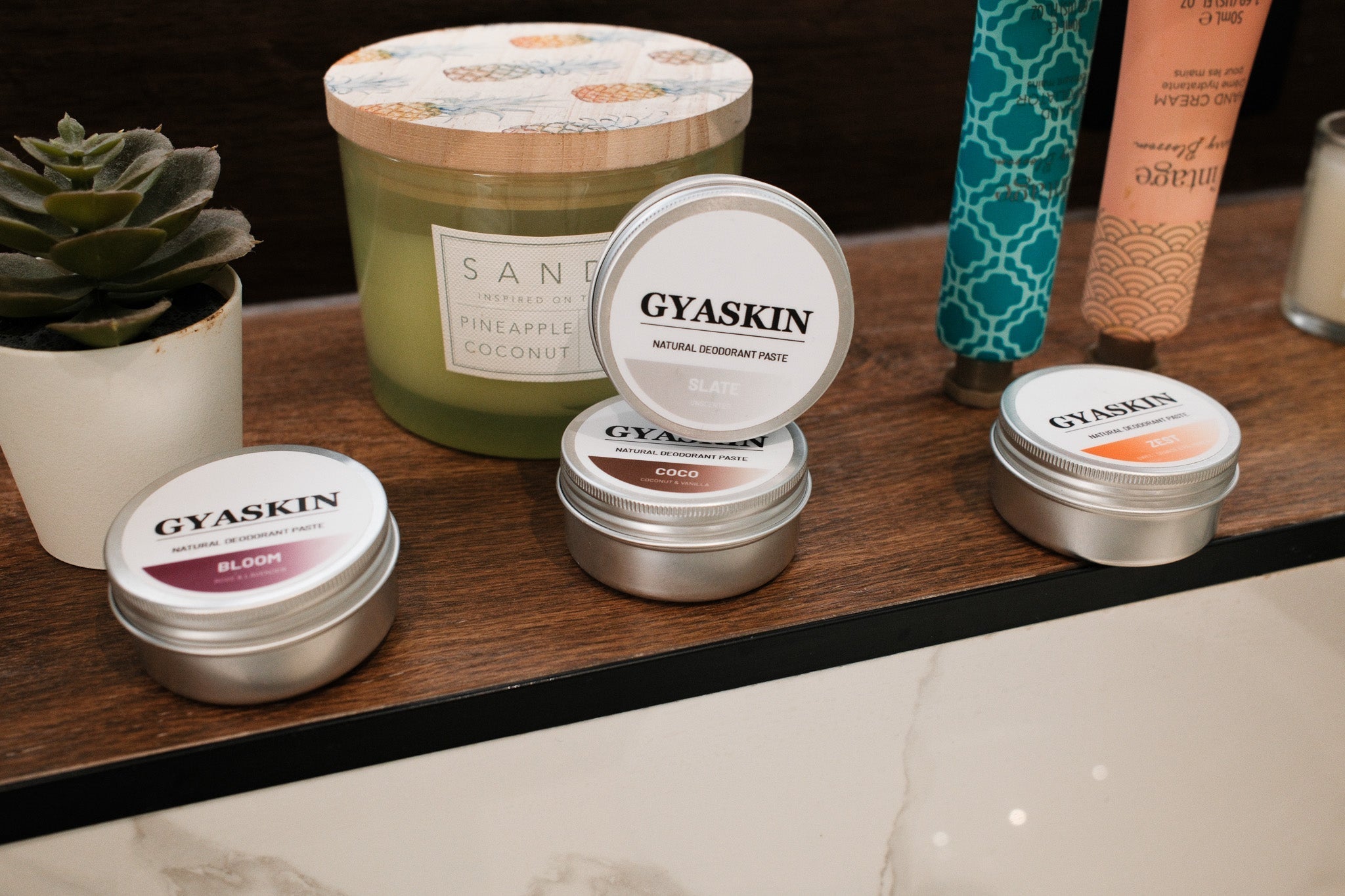
Aluminium-free · 48hr protection · 5 scents
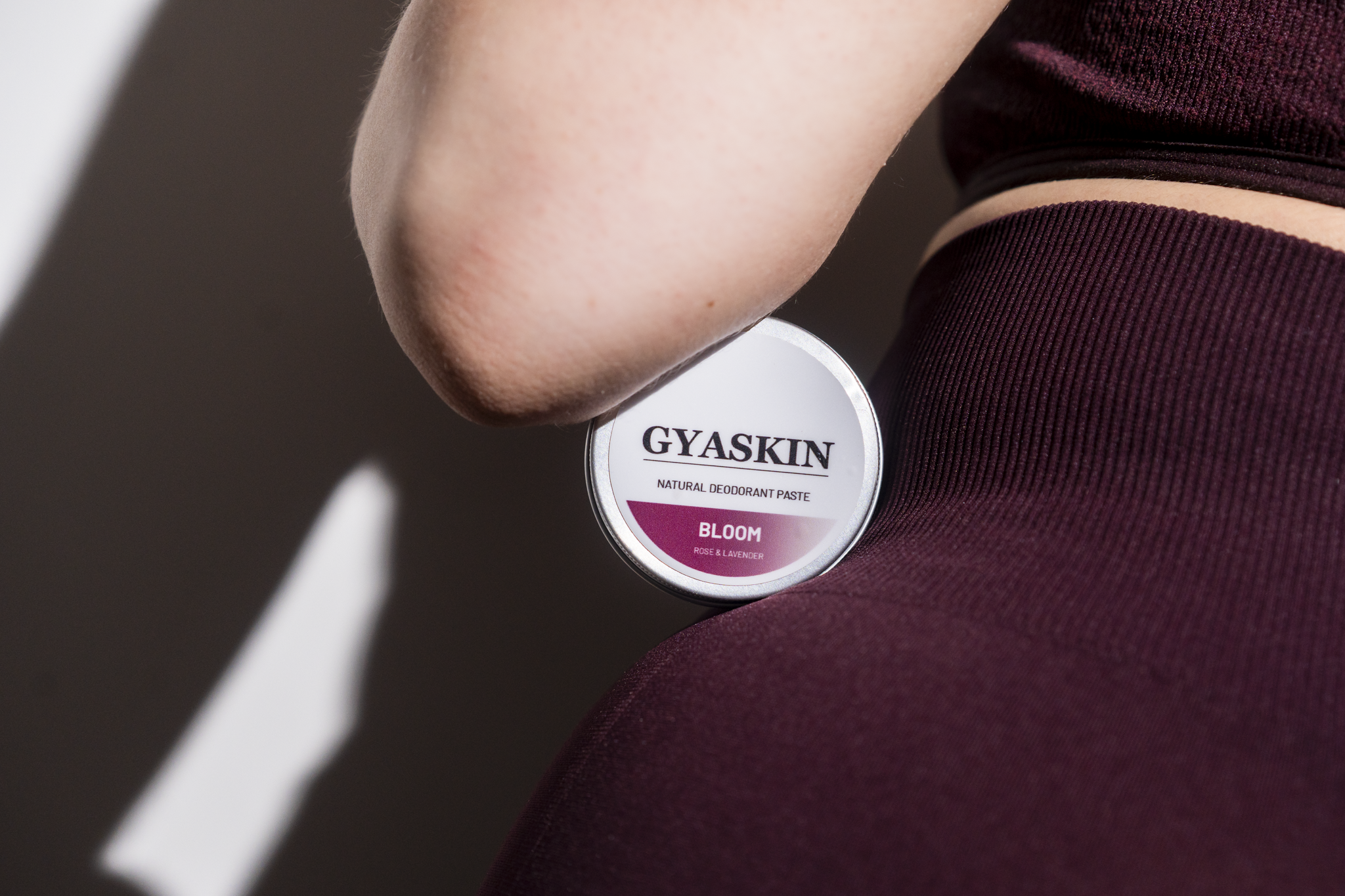
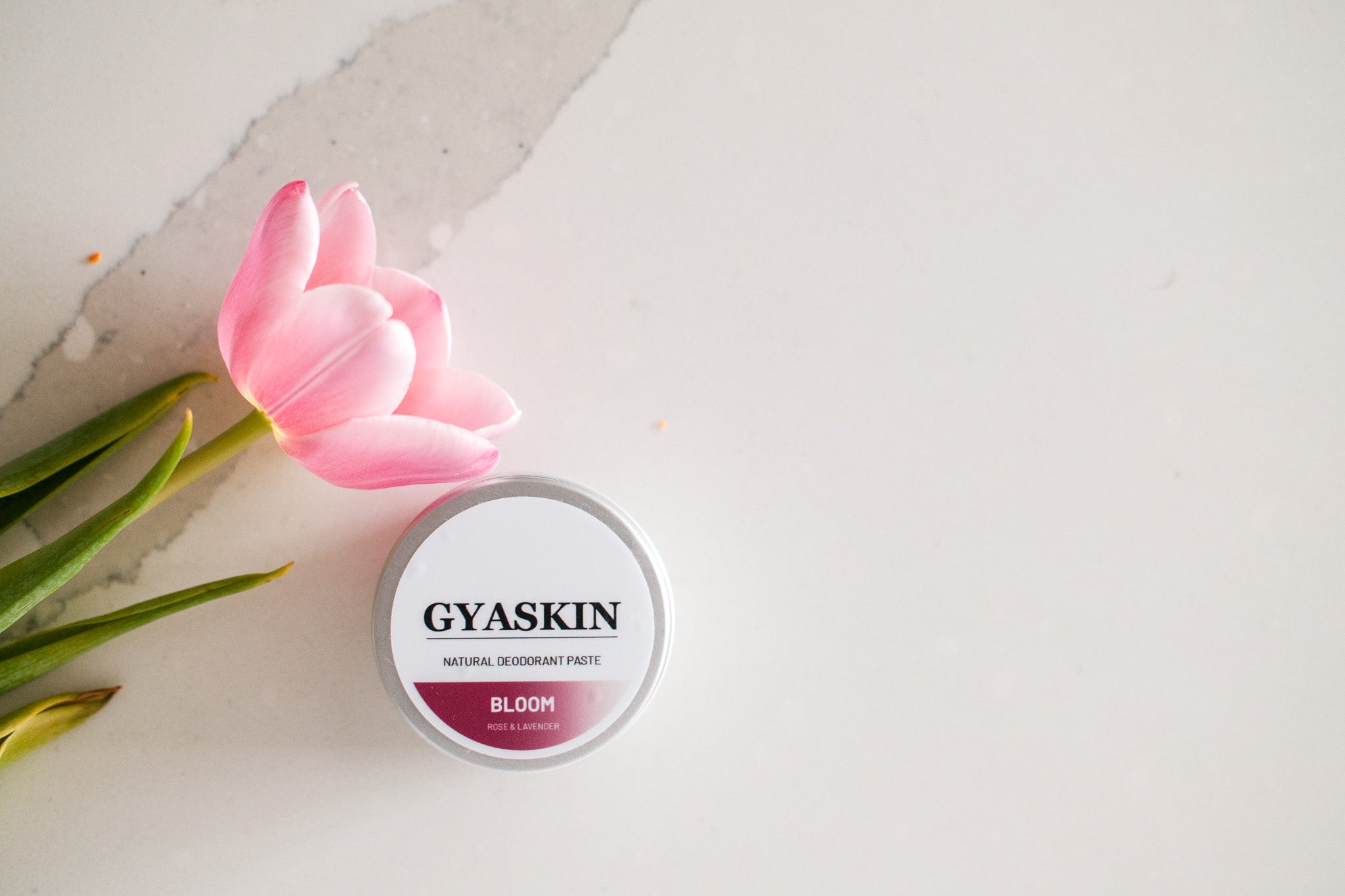
Gyaskin Natural Deodorant
Sensitive & Regular strength. Plastic-free aluminium tin.
£14.99 →
Is it actually better for your body?
This is the question most people are really asking. And the honest answer is: in several measurable ways, yes — though "better" depends on what outcome you care about most.
Your sweat glands can function normally
Sweating is a biological function, not a design flaw. It regulates body temperature, supports immune response, and helps maintain the skin's surface microbiome. Conventional antiperspirant physically blocks those glands day after day, year after year. Natural deodorant doesn't. Your body gets to do what it's built to do.
Your underarm skin often improves
One of the most consistent pieces of feedback from people who switch is that their underarm skin becomes healthier over time — less irritated, less congested, softer. Removing daily aluminium deposits and synthetic fragrance from an area of thin, sensitive skin makes a real difference for many people.
You reduce exposure to synthetic ingredients
Skin is absorptive — particularly in the underarm area where there's warmth and friction. Switching to a formula built from plant-based, biodegradable ingredients reduces your daily chemical load. Whether or not every synthetic ingredient in conventional deodorant is proven harmful, reducing unnecessary exposure is a sensible default.
One thing to know: Some people experience skin irritation with bicarb-based natural deodorants — redness or a rash, especially with heavy exercise. This isn't a universal reaction, but if it happens, switching to a bicarb-free Sensitive formula (like Gyaskin Sensitive) usually resolves it completely.
Is it better for the environment?
This is where the picture gets more nuanced — because not all "natural" deodorants are equally sustainable. But when you look at the full lifecycle of a product, the case for natural deodorant is strong.
Biodegradable ingredients
The ingredients in conventional antiperspirant — aluminium salts, synthetic polymers, silicones, synthetic fragrance compounds — don't break down easily in the environment. They wash off in the shower, enter the water system, and accumulate. Natural deodorant ingredients — plant waxes, starches, essential oils, magnesium — are biodegradable. They break down without leaving persistent residue.
Packaging
This is one of the biggest wins. The standard plastic deodorant stick is made from multiple grades of plastic — almost none of which gets recycled in practice. Plastic deodorant packaging is estimated to contribute millions of units to landfill in the UK each year.
Gyaskin uses aluminium tins — a material that is infinitely recyclable without degradation. Aluminium recycling uses around 95% less energy than primary production. It's not a perfect solution, but it's a meaningful one compared with a single-use plastic stick.
Manufacturing and supply chain
Petroleum-derived ingredients require extractive, energy-intensive processing. Plant-based ingredients typically have a lower carbon footprint in production. Combined with simpler formulas and shorter ingredient lists, natural deodorants tend to have a lighter manufacturing footprint overall.

Try before you commit
Mini Discovery Pack
All 5 scents in sample size. Find your formula first.
Save 50% →
But does it actually work?
It's the question that stops most people from switching. And it's a fair one — because there's a generation of natural deodorant products that didn't work well, and the reputation has stuck.
The honest answer: modern natural deodorant formulas have come a long way. For most people, a well-formulated product provides reliable 24–48 hour protection once the body has had a chance to adjust — usually within one to four weeks.
The adjustment period is real. If you've used aluminium-based antiperspirant for years, your sweat glands have been suppressed and your skin's microbiome has shifted. When you remove aluminium, things recalibrate. Some people experience more odour or perspiration in the first week or two. This is temporary — and it's a sign the process is working.
Two things that make natural deodorant work better:
- Apply to completely dry skin. The most common mistake. Damp skin prevents proper absorption.
- Choose the right formula for your skin. If bicarb causes irritation, go straight to Sensitive. If one scent isn't performing, try another — essential oil blends interact differently with individual skin chemistry.
The honest verdict
Natural deodorant isn't a miracle product. It won't suit everyone on the first try, and there's an adjustment period that asks something of you. But when you look at the full picture — what's in it, how it interacts with your body, and what happens to those ingredients afterwards — the case is clear.
Fewer synthetic ingredients absorbed daily into sensitive skin. No aluminium blocking your sweat glands. Biodegradable formulas that don't persist in the water supply. Packaging that actually gets recycled.
For most people who give it a proper two-week trial, it works. And they wonder why they didn't switch sooner.