Cart
0
Why Natural Deodorant Isn't Working (And How to Fix Your Underarms for Good)
You swap out your antiperspirant, expect fresher, healthier underarms — and end up smelling worse than before. It's more common than you think, and it's not the deodorant that's failing. Here's what's actually happening.
Natural deodorant gets blamed for a lot of things it didn't do. People switch, hit a rough patch in the first week or two, and walk away convinced it just doesn't work for them. But those rough patches have a specific cause — and once you understand what's happening beneath the surface, fixing it becomes straightforward.
The problem isn't the product. It's that your underarms have been running on a suppressed system for years, and switching deodorant doesn't instantly undo that.
First: sweat is not the problem. Odour is.
This distinction matters more than most people realise. Sweat itself is nearly odourless. The smell only develops when bacteria on your skin — particularly a type called corynebacterium — break down the proteins and fatty acids in your sweat.
Conventional antiperspirant addresses this by blocking your sweat glands with aluminium salts. No sweat, no bacterial interaction, no smell. Simple — except it also means your body can't regulate temperature properly, your sweat glands become congested, and your skin's microbiome shifts over time.
Natural deodorant takes a different approach: it neutralises the bacteria rather than blocking the gland. You still sweat — as you should — but the bacterial reaction that causes odour is controlled.
The key difference: Antiperspirant stops your body from sweating. Natural deodorant lets your body function normally and addresses odour at its actual source — the bacteria on your skin. One suppresses a biological process. The other works with it.
The adjustment period no one prepares you for
When you stop using aluminium-based antiperspirant, your body doesn't instantly reset. For years, your sweat glands have been physically blocked. The moment you remove that blockage, everything starts to reactivate — and the reactivation isn't subtle.
In the first one to four weeks, you may experience:
- More noticeable odour than usual
- Increased perspiration as glands reopen
- Product buildup surfacing from congested pores
- Sensitivity or mild irritation
This is what people call the "underarm detox" — and it's real, but it's temporary. It's not natural deodorant failing. It's your body recalibrating after years of being shut down.
The mistake most people make: they quit right in the middle of this window — usually around days four to six — just before things start to improve. If you've switched and given up, there's a good chance you stopped at exactly the wrong moment.

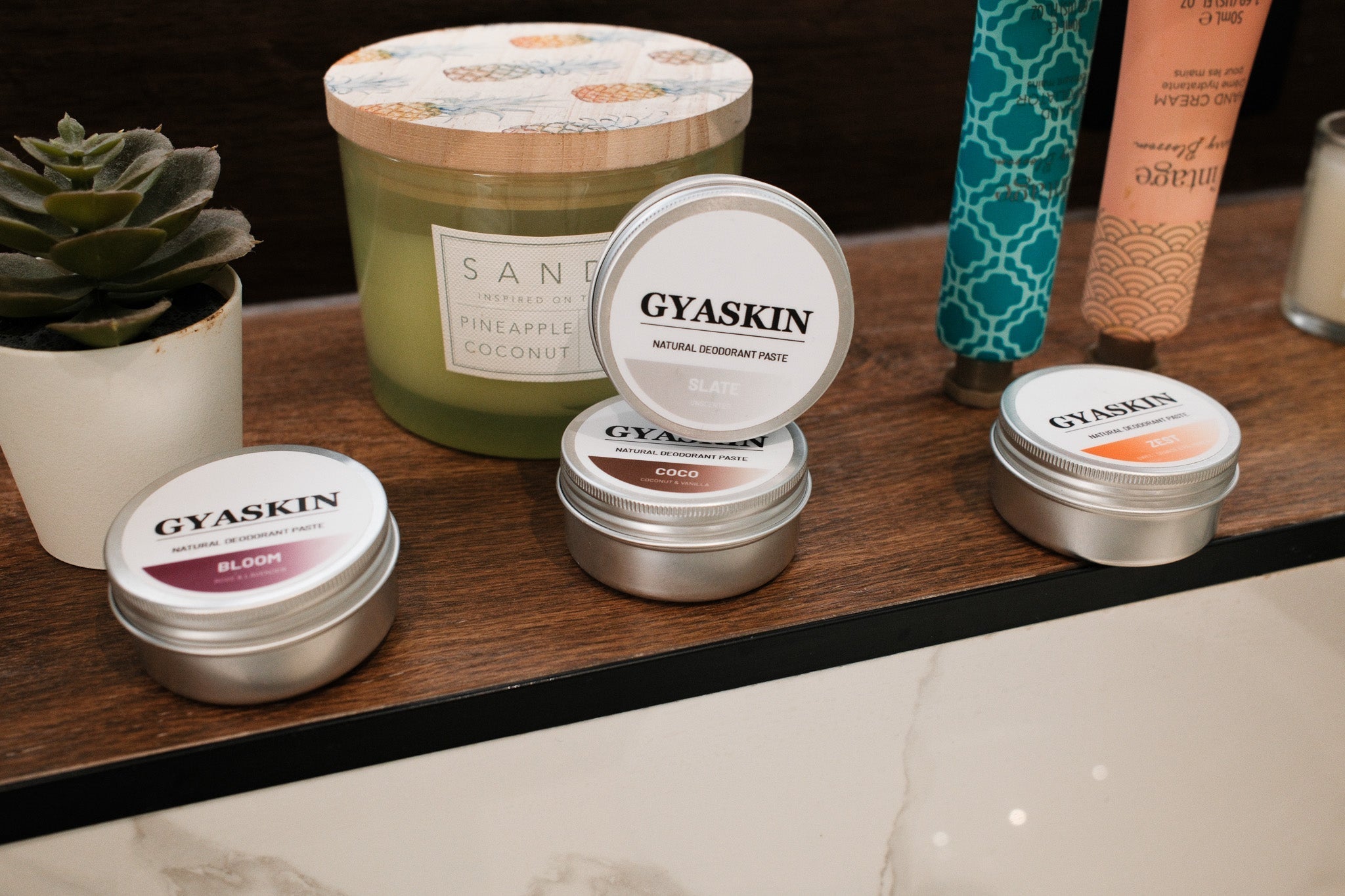
Not sure which formula suits you? Mini Discovery Pack Try all 5 scents in sample size before committing to a full size.
Shop now →
How to actually fix it: a smarter underarm routine
Natural deodorant works best when you treat your underarms the same way you treat the rest of your skin — with a consistent routine, not just a product swap. Here's how to build that routine properly.
Step 1 — Cleanse properly every day
Your underarms are what dermatologists call an intertriginous zone — a warm, enclosed environment where bacteria naturally thrive. That makes daily cleansing non-negotiable, but the method matters.
Use a gentle, pH-balanced wash and take a moment to actually lather the area. Don't scrub aggressively — that disrupts the skin barrier and can make odour worse. The goal is removing buildup without stripping the skin.
Step 2 — Exfoliate to clear the way
One of the most overlooked reasons natural deodorant underperforms: buildup. Dead skin cells, residual product, and trapped oil form a film that prevents active ingredients from absorbing — and feeds the bacteria you're trying to neutralise.
A mild chemical exfoliant (low-concentration glycolic acid works well) used two to three times per week clears pores, smooths the skin surface, and meaningfully reduces the bacterial load. When the environment improves, odour naturally decreases. This single step fixes the problem for a lot of people.
Step 3 — Support your skin barrier
Irritated, compromised skin is more reactive — and more prone to odour. Shaving, friction, product switching, and over-exfoliation can all weaken the barrier over time.
Keep it simple: moisturise lightly once or twice a week, avoid applying deodorant to freshly shaved or broken skin, and take the occasional rest day from products altogether if your skin feels reactive. Healthy skin supports a more stable microbiome. A stable microbiome means less odour.
Step 4 — Apply correctly
The most common mistake, and the easiest fix: always apply to completely dry skin. Damp underarms prevent proper absorption and significantly reduce performance. After your shower, pat dry and wait a full minute before applying.
Use a small amount — roughly a pea-sized scoop, warmed between fingertips for a few seconds before applying. It should absorb like a lightweight moisturiser. If it's balling up or sitting on the surface, the skin may still be damp.

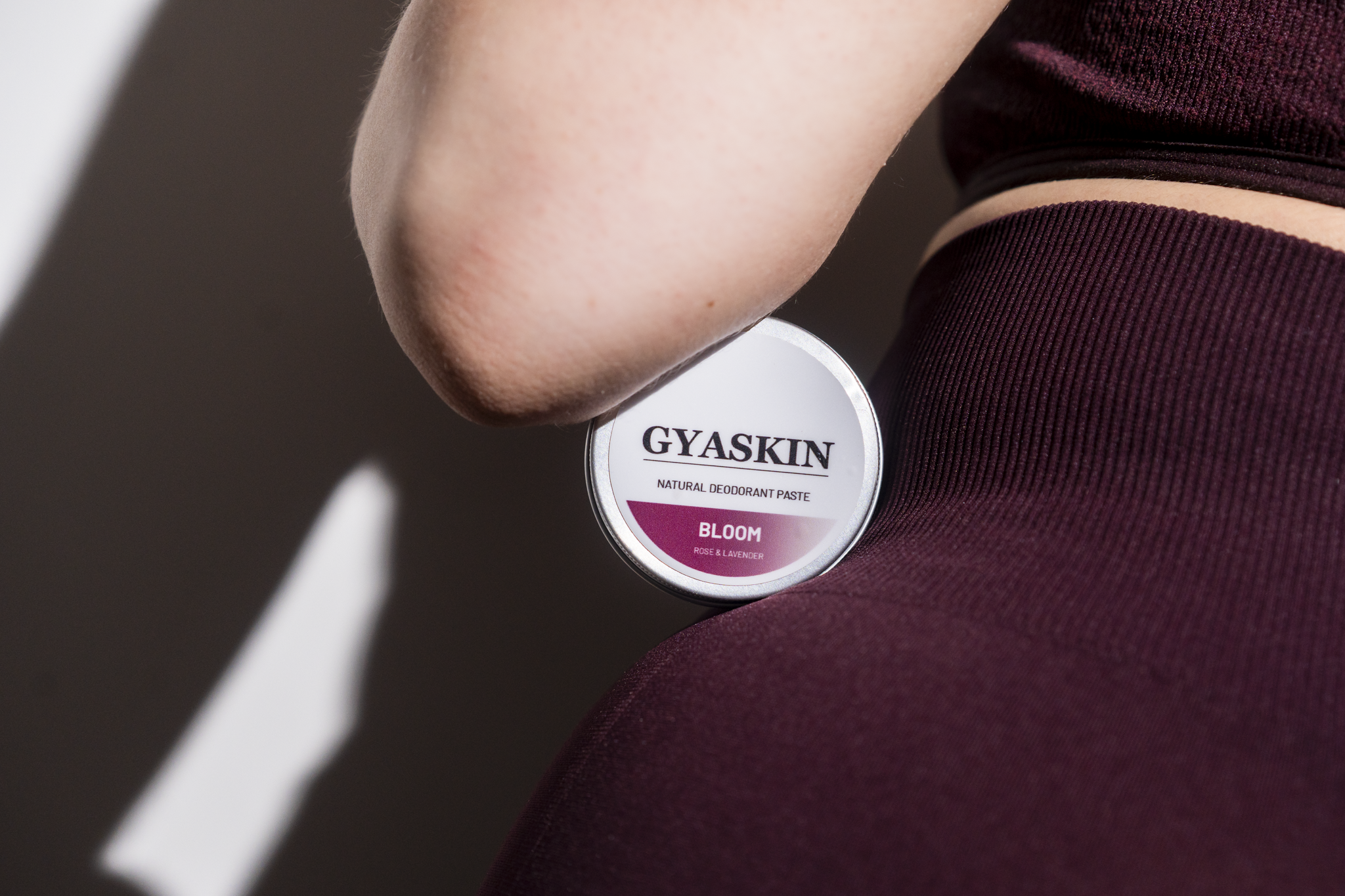
Aluminium-free · 48hr protection · 5 scents Gyaskin Natural Deodorant Regular & Sensitive strength. Plastic-free aluminium tin.
£9.99 →
Step 5 — Choose the right formula for your skin
Not all natural deodorants suit all skin types — and switching between products every few days because one isn't immediately working resets the process every time. Give each product a genuine two-week run before making a call.
If you've experienced redness, itching, or a rash with natural deodorant before, that's almost always a reaction to bicarb soda. It's not a universal reaction, but it's a common one. The fix is simple: switch to a bicarb-free Sensitive formula that uses magnesium hydroxide instead. Same effective odour control, without the irritation.
Scent choice also matters more than people expect. Different essential oil blends interact differently with individual skin chemistry — what smells clean on one person can read differently on another. If your current scent isn't performing, it may be worth trying an alternative blend before writing off the whole category.
The bigger shift: underarms aren't an afterthought
The real reason natural deodorant "fails" for so many people isn't the formula — it's the mindset. We've been conditioned to treat deodorant as a quick fix. Swipe it on, expect instant results, move on. Done.
But your underarms are part of your skin ecosystem. A warm, active, frequently irritated part of it. When you start giving them the same level of basic care you'd give the rest of your skin — cleansing properly, clearing buildup, supporting the barrier — you stop chasing a product that masks the problem and start building a system that prevents it.
Natural deodorant that "doesn't work" almost always becomes natural deodorant that works better than anything you used before. It just takes getting there.